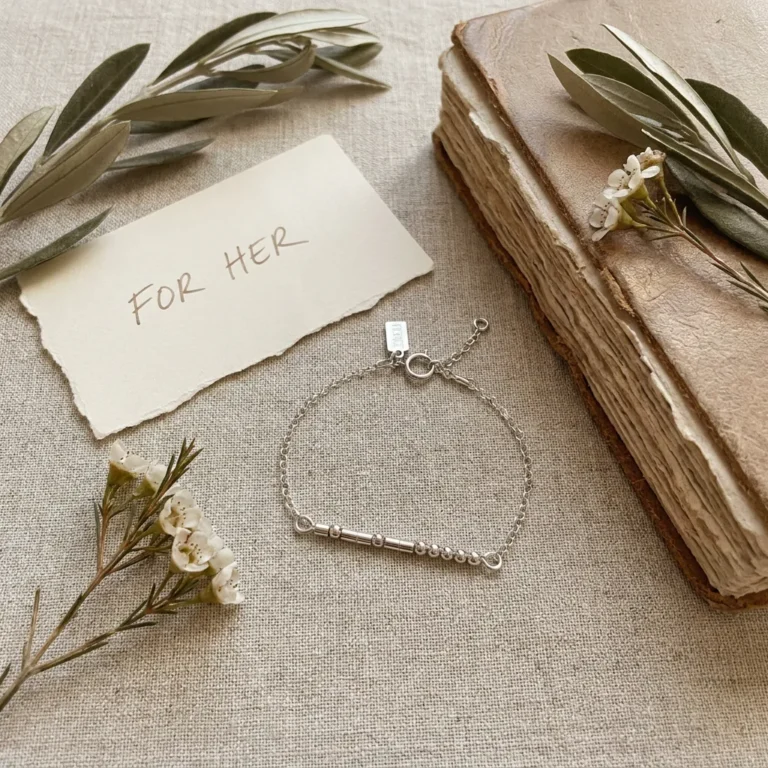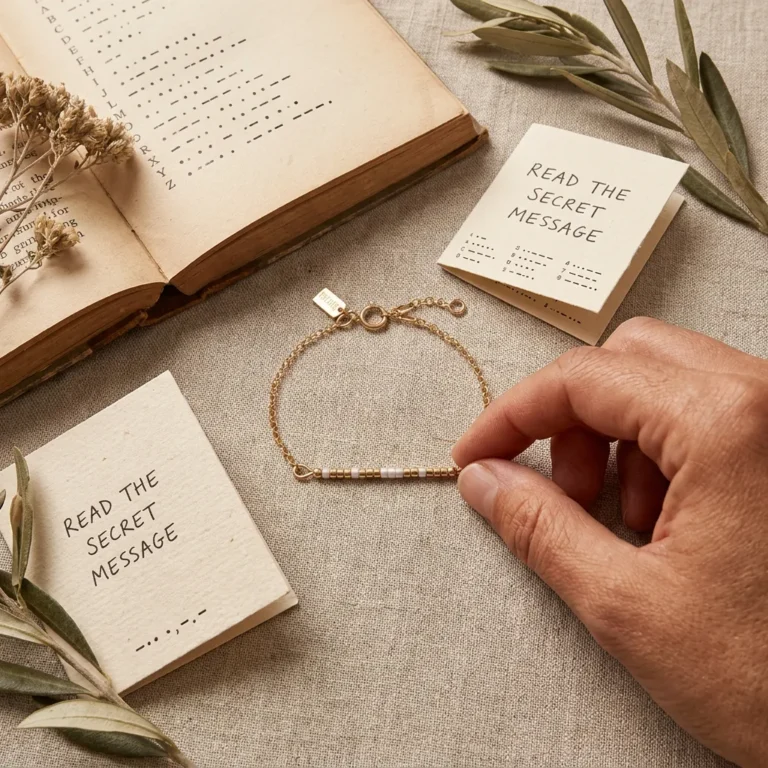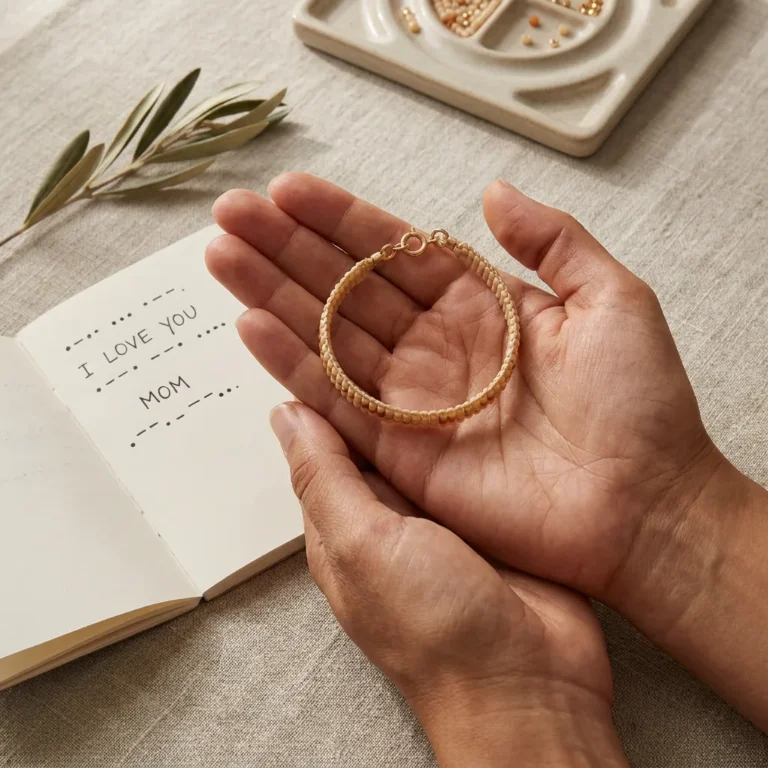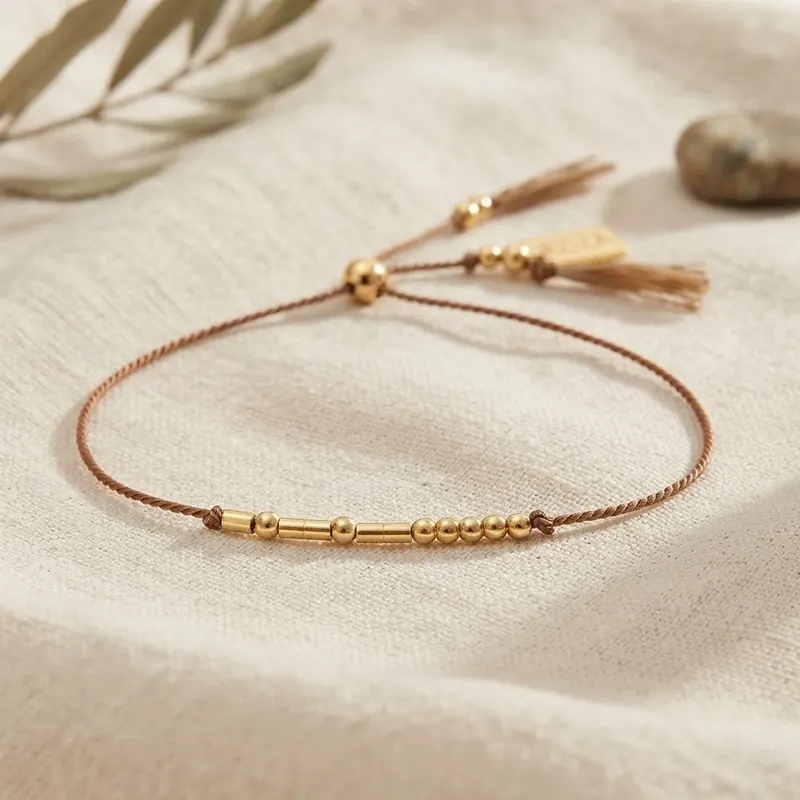

Someone types “morse code jewelry” into Google at least a few times a day in Cyprus. Usually she’s not sure what she’s looking for yet. She saw it on someone’s wrist, or scrolled past a bracelet with a strange little pattern of dots, and wanted to know what it actually was. This post is for her.
Morse code itself is old. Older than most jewelry trends by about 180 years. It was built for telegraph operators to send messages down a wire, one letter at a time, using nothing but short and long signals. No one designing that system in 1836 was thinking about bracelets. And yet here we are, and morse code jewelry is one of the more requested styles of personalized jewelry on the planet.
Why did morse code become a way to wear a message?
Because it solves a problem regular engraving can’t. A name engraved on a bracelet says the name out loud. Anyone who looks at it knows exactly what it says. Morse code doesn’t do that. It sits there quietly as a row of dots and dashes, and unless you know the code (or know the person wearing it), it just looks like a pattern. That’s the whole appeal. The message exists, but it’s private. Only she knows what it says, and maybe one or two other people she’s told.
That’s different from most personalized jewelry, which tends to be readable at a glance. Morse code jewelry asks you to already be in on something, which makes it feel less like decoration and more like a small secret you’re carrying around.
How do people usually choose what to encode?
Short words work best. A name. A date. “Mom.” “Soulmate.” Sometimes just an initial. The shorter the word, the cleaner the pattern looks once it’s translated into dots and dashes and set into metal or knotted into cord. People searching things like “decode it” or wondering what a specific sequence of dashes means are usually staring at a piece someone gave them, trying to work out the message for themselves before they ask. That moment of figuring it out, alone, is part of the gift.
If you’re not sure how a word or phrase translates, it helps to run it through a morse code translator first, just to see the shape of it before deciding on a design. Some words translate into long, busy patterns. Others come out clean and simple. Seeing it laid out helps a lot of people land on the right message.
What makes handmade morse code jewelry different from a mass produced version?
Anyone can print a pattern of dots on a machine. What changes the piece is a person actually knotting the cord or setting the pattern by hand, one at a time, knowing that a specific message is going to sit against someone’s skin every day. In Cyprus, that distinction matters more than people expect. A handmade piece carries the fact that someone sat down and made this one, not a thousand identical ones.
That’s part of why gift-givers lean toward it. Around 80% of the people buying morse code jewelry from small studios are buying it for someone else, usually another woman in their life. A sister, a best friend, a mother. They’re not buying a product. They’re buying a way to say something they might not say out loud otherwise.
Where does morse code jewelry fit into someone’s everyday life?
Mostly it just becomes part of what she wears. A bracelet she puts on every morning without thinking twice, until someone asks about the dots, and she gets to explain it or keep it to herself. That’s the quiet mechanism behind why people keep buying this style of jewelry year after year. It doesn’t shout. It just waits there, ready to mean something the moment someone notices.
Frequently Asked Questions
What is morse code jewelry?
Morse code jewelry is jewelry that encodes a word, name, or short phrase using the dots and dashes of morse code, usually as a pattern of knots, beads, or engraved marks on a bracelet or necklace.
How do you read a morse code bracelet?
Each letter of the alphabet has its own combination of dots (short signals) and dashes (long signals). Reading the bracelet means matching the pattern back to the morse code alphabet, letter by letter, until the word appears.
What does -.— mean in morse code?
That sequence translates to the letter “Y” in morse code. On its own it usually appears as part of a longer word or phrase rather than standing alone.
Is morse code jewelry a good gift?
It works well as a gift specifically because the message is private. Instead of a name or word displayed openly, the meaning is hidden in a pattern only the wearer (and whoever gave it to her) understands.